In this article
- What Kitchen Island Installation Costs in Central NJ
- 2026 Kitchen Island Cost by Type
- Cost Breakdown: What You Are Paying For
- Freestanding or Furniture Island: $500 - $2,500
- Semi-Prefab Cabinet Island: $2,500 - $6,500
- Built-In Cabinet Island: $7,500 - $14,000
- Custom Island With Seating: $10,000 - $20,000
- Island With Sink or Dishwasher: $15,000 - $28,000
- Island With Cooktop: $18,000 - $35,000+
- Layout Clearances Before You Price Anything
- NJ Electrical and Permit Considerations
- Flooring: The Hidden Island Cost
- Materials That Change the Price
- When an Island Should Be Part of a Full Kitchen Remodel
- How to Save Money on a Kitchen Island
- What a Complete Kitchen Island Estimate Should Include
- Get a Kitchen Island Installation Estimate in Central NJ
What Kitchen Island Installation Costs in Central NJ#
Kitchen island installation in Central New Jersey usually costs $2,500 to $18,000 installed in 2026. A small freestanding or semi-prefab island may cost $2,500 to $6,500. A built-in cabinet island with countertop, trim, and electrical commonly lands around $7,500 to $14,000. A custom island with seating, quartz, plumbing, dishwasher, microwave drawer, panel-ready finishes, or a cooktop can run $15,000 to $35,000+.
National cost guides often give a broad average, then stop. That does not help a Mercer County homeowner decide whether an island actually fits, whether the floor has to be patched, whether the electrical can be run cleanly, whether the old kitchen layout needs to change, or whether the island will make the kitchen better or just tighter.
The5thwall builds and remodels kitchens across Lawrence, Hamilton, Princeton, West Windsor, Ewing, Trenton, Lawrenceville, Pennington, Robbinsville, Hopewell, and nearby Central NJ towns. This guide prices the island as a real construction scope, not just a furniture purchase.
For full kitchen numbers, start with our kitchen remodel cost NJ guide, 10x10 kitchen remodel cost guide, and small kitchen remodel cost guide.
Planning an island? [Schedule a free kitchen walkthrough](/contact). We check clearances, traffic flow, cabinet layout, electrical path, plumbing feasibility, flooring, and whether the island should be standalone or part of a larger kitchen remodel.
2026 Kitchen Island Cost by Type#
| Island Type | Central NJ Installed Cost | Best Fit | Notes |
|---|---|---|---|
| Freestanding cart or furniture island | $500 - $2,500 | Extra prep space in small kitchens | Usually no construction, no permanent utilities |
| Semi-prefab cabinet island | $2,500 - $6,500 | Budget storage and counter space | Limited sizes, simpler finish details |
| Built-in cabinet island | $7,500 - $14,000 | Most family kitchens | Cabinets, countertop, panels, trim, electrical |
| Custom island with seating | $10,000 - $20,000 | Open kitchens and family gathering space | Requires clearance and overhang planning |
| Island with sink or dishwasher | $15,000 - $28,000 | Full kitchen remodels | Plumbing, drain, electrical, flooring, permits |
| Island with cooktop or premium features | $18,000 - $35,000+ | High-end kitchen redesigns | Venting, electrical/gas, safety clearances, design work |
The cheapest island is furniture. The most valuable island is planned into the kitchen correctly. The most expensive island is the one installed in the wrong place and rebuilt later.
Cost Breakdown: What You Are Paying For#
| Line Item | Typical NJ Cost |
|---|---|
| Base cabinets or island box | $1,500 - $8,000+ |
| Finished panels, toe-kick, trim, molding | $500 - $3,000 |
| Countertop slab or butcher block | $1,200 - $8,500+ |
| Electrical wiring and outlets | $750 - $2,500 |
| Pendant lighting or switching changes | $500 - $2,500 |
| Plumbing for sink or dishwasher | $2,000 - $8,000 |
| Appliance installation | $500 - $3,500 |
| Flooring patch or replacement | $750 - $6,000 |
| Demolition or removal of old island | $500 - $2,500 |
| Design, layout, permits, and project management | $750 - $4,000+ |
Cabinetry and countertop get the attention, but utilities and flooring drive the surprises. If the island needs a sink, dishwasher, cooktop, microwave drawer, beverage fridge, or outlets, the project becomes a coordinated kitchen construction scope.
Freestanding or Furniture Island: $500 - $2,500#
A freestanding island is a movable or furniture-style piece that adds counter space without permanently changing the kitchen. It can be a rolling cart, butcher block table, or finished furniture island.
This is best for small kitchens, rentals, tight budgets, or homeowners who want to test whether an island works before committing to construction. It usually does not require permits, plumbing, electrical, flooring repair, or cabinet installation.
The limitation is resale and fit. A furniture island may look nice, but it rarely feels integrated with the kitchen. It can also become a traffic obstacle if the room does not have enough clearance.
Semi-Prefab Cabinet Island: $2,500 - $6,500#
A semi-prefab island uses stock or ready-to-assemble cabinets with a standard countertop. It may be anchored to the floor, finished with side panels, and topped with butcher block, laminate, quartz remnant, or a small stone slab.
This is a strong budget option when the kitchen has enough space and the homeowner does not need plumbing or appliances. It is common in newer Robbinsville and West Windsor homes where the original builder-grade kitchen has open floor area but not enough storage.
The watchout is finish quality. Exposed cabinet sides, mismatched toe-kick, uneven floors, and poor panel details make a cheap island look like an afterthought. The installation details matter even when the cabinet boxes are affordable.
Built-In Cabinet Island: $7,500 - $14,000#
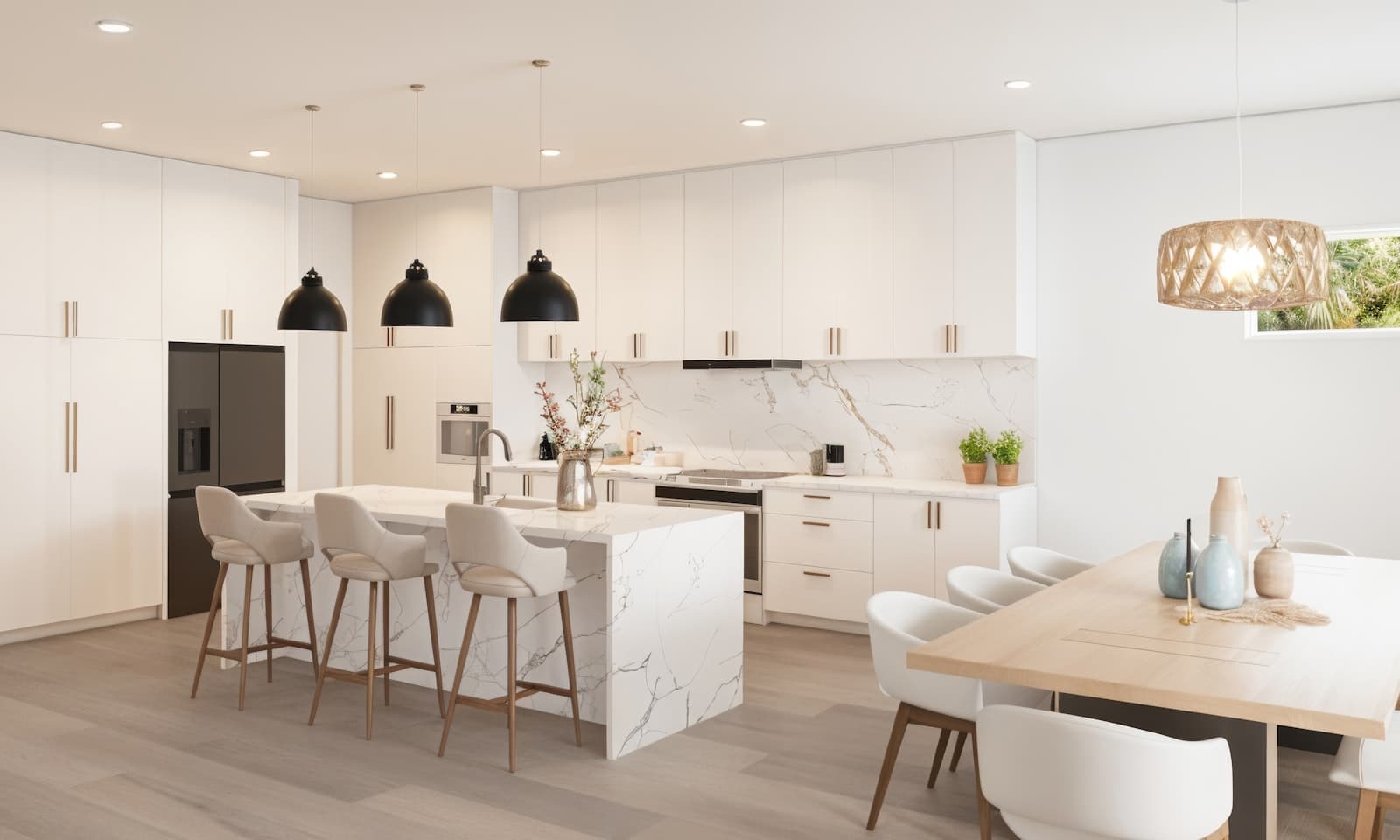
A built-in cabinet island is the most common serious kitchen island project. It usually includes base cabinets, drawers, finished end panels, a countertop, toe-kick, trim, electrical outlets, and sometimes pendant lighting.
This is where the island starts to feel like part of the kitchen. You can add deep drawers for pots, trash pull-outs, a microwave shelf, cookbook storage, tray dividers, or seating overhang. The island can also correct a kitchen that lacks prep space.
In Central NJ, this tier often pairs with cabinet refacing, new countertops, or a partial kitchen remodel. If your existing perimeter cabinets are strong, you may be able to add an island without gutting the room. If the existing cabinets, flooring, and countertop are already tired, adding a beautiful island can make the rest of the kitchen look worse.
Custom Island With Seating: $10,000 - $20,000#
Seating changes the design. A good island overhang needs enough knee space, enough walkway clearance behind stools, and support for the countertop. A bad seating layout creates a pinch point where people are constantly squeezing behind chairs.
Typical seating rules:
- Plan about 24 inches of width per seat.
- Use roughly 12 to 15 inches of overhang for comfortable counter seating.
- Leave about 36 inches of walkway minimum around the island.
- Leave closer to 42 to 48 inches in busy cooking zones or where appliances open.
- Do not place seating where it blocks a refrigerator, dishwasher, oven, or main walkway.
Many Princeton, Lawrenceville, and Hopewell kitchens have the square footage for an island, but the best shape may not be the biggest rectangle possible. Sometimes a narrower island, peninsula, or open prep table creates a better kitchen than forcing four stools into the wrong spot.
Island With Sink or Dishwasher: $15,000 - $28,000#
Adding plumbing to an island changes the project from cabinet installation to kitchen remodeling. A sink needs hot and cold water, a drain, venting strategy, shutoffs, and often dishwasher coordination. If the kitchen sits over an unfinished basement, the work may be manageable. If it sits over finished space, slab, or difficult framing, the cost rises quickly.
This tier makes sense when the island is part of a full kitchen redesign. A prep sink can improve workflow. A main sink in the island can open views into the living area. A dishwasher in the island can clean up the perimeter cabinet run.
The mistake is adding plumbing just because it seems high-end. If the island sink creates dirty dishes in the main gathering area, blocks seating, or forces expensive floor repairs, it may not be worth it.
Island With Cooktop: $18,000 - $35,000+#
A cooktop island can look impressive, but it is not the right move for every home. It may require gas or high-amperage electric service, code-compliant clearances, ventilation, heat-resistant countertop planning, and safe landing space around the cooking surface.
Venting is the major issue. A ceiling-mounted island hood is visible and expensive. A downdraft system can be cleaner visually, but it takes cabinet space and may not perform as well for serious cooking. If the current range wall already works, it may be better to keep cooking on the perimeter and use the island for prep, storage, and seating.
We usually recommend island cooktops only when the full kitchen layout supports it. For many Central NJ family kitchens, a sink-free, cooktop-free island is more useful every day.
Layout Clearances Before You Price Anything#
Before talking materials, confirm the island fits. The most common island failure is not budget. It is clearance.
| Area | Practical Target |
|---|---|
| Minimum walkway around island | 36 inches |
| Comfortable cooking aisle | 42 inches |
| Two-cook kitchen aisle | 48 inches |
| Behind island stools | 44 - 60 inches if people pass behind |
| Seating width per person | 24 inches |
| Counter overhang for stools | 12 - 15 inches |
Open-concept homes can usually handle larger islands. Older Hamilton, Ewing, and Lawrence kitchens often need a wall opening, peninsula conversion, or cabinet rework before an island makes sense. A tight island makes the kitchen feel worse even if the finishes are beautiful.
NJ Electrical and Permit Considerations#
Permanent kitchen islands often involve electrical planning. Outlets, appliance circuits, dishwasher power, microwave drawers, disposal switches, cooktop circuits, and pendant lighting should be reviewed by a licensed electrician. Electrical work may trigger permits and inspection depending on scope.
Be careful with older advice that says every island follows one universal outlet rule. Electrical code adoption and local enforcement change over time. The safer planning standard is this: if the island is permanent, powered, or serving appliances, the electrical layout should be designed and permitted correctly before cabinets and countertops are installed.
Plumbing, gas, structural work, and major kitchen layout changes can also trigger permits. The cost of doing this correctly is smaller than the cost of cutting open a finished island after inspection problems.
Flooring: The Hidden Island Cost#
Flooring is one of the most overlooked kitchen island costs. If you remove an old peninsula or island, the floor underneath may be unfinished, faded, patched, or cut around old cabinets. If you add a new island, anchoring and utility runs may disturb existing flooring.
Common scenarios:
- Hardwood can sometimes be patched, sanded, and refinished.
- Tile is harder to match if the old tile is discontinued.
- Luxury vinyl plank can be easier to patch if material is still available.
- Older sheet vinyl may need a larger replacement area.
- Uneven floors may need leveling before cabinets sit correctly.
If the kitchen floor is already due for replacement, install or plan the island as part of the flooring scope. That avoids awkward patches and makes the island look original to the kitchen.
Materials That Change the Price#
| Material Choice | Budget Effect |
|---|---|
| Stock cabinet boxes | Lowest cabinet cost, fewer size options |
| Semi-custom cabinets | Better sizing, door styles, and storage |
| Custom cabinetry | Highest fit and finish, highest cost |
| Butcher block top | Warm look, lower cost, more maintenance |
| Quartz countertop | Durable, popular, mid-to-high cost |
| Granite or quartzite | Strong natural look, pricing varies by slab |
| Waterfall countertop sides | Premium look, major slab and fabrication cost |
| Decorative panels | Makes the island look finished from all sides |
| Soft-close drawers and pull-outs | Adds cost but improves daily use |
The island is visible from every angle, so exposed sides matter. Budget islands often fail because they use decent cabinets but cheap end panels, thin trim, or a countertop that looks disconnected from the rest of the kitchen.
When an Island Should Be Part of a Full Kitchen Remodel#
An island can be a standalone project when the existing kitchen is in good shape, the floor is continuous, the layout works, and the island does not require major utility changes.
It should be part of a larger kitchen remodel when:
- The existing cabinets are worn, damaged, or poorly laid out.
- The countertops need replacement soon.
- The floor has to be patched or replaced.
- Appliances are moving.
- A wall is being opened.
- Plumbing or electrical changes are significant.
- The kitchen is too tight without redesigning the perimeter.
For many homes, adding an island during a full remodel is more efficient than adding it later. The electrician, plumber, flooring crew, cabinet installer, and countertop fabricator can sequence the work once instead of reopening the kitchen.
How to Save Money on a Kitchen Island#
The best savings come from smart scope decisions, not cheap shortcuts.
- Keep plumbing out of the island unless it improves the layout.
- Avoid cooktops in the island unless ventilation is solved.
- Use semi-custom cabinets instead of fully custom when sizes work.
- Choose a remnant or standard quartz color when possible.
- Keep the island rectangular instead of curved or multi-level.
- Coordinate island work with flooring or countertop replacement.
- Use drawers where they matter most and doors where storage is simple.
Do not save by skipping electrical planning, anchoring cabinets poorly, using weak countertop supports, or ignoring aisle clearance. Those mistakes make the kitchen less functional and harder to fix.
What a Complete Kitchen Island Estimate Should Include#
A good estimate should include the island dimensions, cabinet line, door style, drawer layout, finished panel details, countertop material, countertop edge, overhang support, electrical scope, plumbing scope if any, flooring assumptions, permit responsibility, demolition, disposal, paint or trim repair, project timeline, and what is excluded.
Ask these questions before signing:
- 1How much clearance will remain on all sides?
- 2How many seats will fit comfortably?
- 3Will appliance doors and drawers open without conflict?
- 4Is electrical work included and permitted where required?
- 5Does the floor need patching or replacement?
- 6Is the countertop support designed for the overhang?
- 7Are finished panels included on visible sides?
- 8Should this be done with a larger kitchen remodel instead?
If the quote only says "install kitchen island" with one number, it is not detailed enough.
Get a Kitchen Island Installation Estimate in Central NJ#
The5thwall builds kitchen islands as part of practical, high-quality kitchen remodeling. We do not just ask what island you saw online. We check whether it fits the room, improves the workflow, supports the way your family uses the kitchen, and makes sense for the home's resale tier.
Learn more about our kitchen remodeling services, compare cabinet refacing costs, or request a free renovation estimate.
Written by
The5thwall
Published May 18, 2026 · 13 min read
The5thwall is a father-and-son licensed NJ contractor based in Mercer County. Beyond the Blueprint is our journal — field-tested insights from two decades of renovation work across Central New Jersey.