In this article
- Quick Answer: What Should an ADA Bathroom Remodel Include?
- ADA vs Aging-in-Place: The Difference Homeowners Need to Know
- Cost of an ADA Bathroom Remodel in NJ
- The Shower Is the Center of the Remodel
- Low-threshold shower
- Curbless shower
- Roll-in shower
- Grab Bars Need Framing, Not Guesswork
- Toilet, Vanity, Door, and Lighting Details
- Permits for Accessible Bathroom Remodeling in NJ
- Medicare, Grants, and Insurance: What to Expect
- Common Mistakes to Avoid
- How The5thwall Plans an Accessible Bathroom
- Related The5thwall Guides
An ADA bathroom remodel in NJ usually means making the bathroom safer, easier to move through, and easier to use for someone with limited mobility. For a private home, the goal is often not strict commercial ADA compliance. The goal is a practical accessible bathroom: a low-threshold or curbless shower, solid blocking for grab bars, better floor traction, a comfort-height toilet, reachable controls, improved lighting, and enough clear space for a walker, caregiver, or wheelchair where the room allows.
For most Central NJ homes, an accessible bathroom remodel costs $25,000 to $60,000 when it is part of a full bathroom renovation. A targeted safety upgrade can be less. A larger layout change, door widening, curbless shower, wet-room waterproofing, or structural floor work can push the number higher. The right scope depends on the person using the bathroom, the age of the house, the joist structure, existing plumbing, and whether the bathroom needs to work for a wheelchair, walker, transfer bench, caregiver, or aging-in-place plan.
The most important decision is this: do not treat accessibility as a grab-bar add-on at the end. Build the bathroom around movement, transfer, slope, waterproofing, blocking, reach, lighting, and daily dignity from the start.
Quick Answer: What Should an ADA Bathroom Remodel Include?#
| Feature | Practical target in a private NJ home | Why it matters |
|---|---|---|
| Shower entry | Curbless or low threshold where structure allows | Reduces trip risk and improves walker or wheelchair access |
| Grab bars | Backed with solid blocking, not just surface mounted | Gives safe support for transfers and balance |
| Shower controls | Reachable from entry or seated position when possible | Reduces twisting and unsafe movement |
| Toilet | Comfort-height fixture with side-wall support where layout allows | Easier sit-to-stand movement |
| Door and clearances | Wider opening, pocket door, or outswing where feasible | Improves access and emergency reach |
| Flooring | Slip-resistant tile with correct slope and drainage | Wet bathrooms are high fall-risk areas |
| Lighting | Bright, layered lighting with night visibility | Improves safety for seniors and low-vision users |
| Waterproofing | Full shower or wet-room waterproofing system | Protects the home when water travels beyond a standard shower footprint |
ADA vs Aging-in-Place: The Difference Homeowners Need to Know#
The term ADA bathroom remodel gets searched a lot, but private single-family homes are not usually required to follow the same ADA Standards that apply to public accommodations or government facilities. That distinction matters. A restaurant bathroom, municipal bathroom, or public facility has legal accessibility requirements. A private home bathroom is usually designed around the actual person, the actual room, and the family's long-term plan.
That does not mean ADA standards are useless for homes. They are a strong design reference. The 2010 ADA Standards specify details such as grab-bar height, clear floor space, transfer showers, roll-in showers, and seat placement. In a home, we use those standards as guidance, then adapt around walls, joists, door swings, plumbing stacks, and the user's real mobility needs.
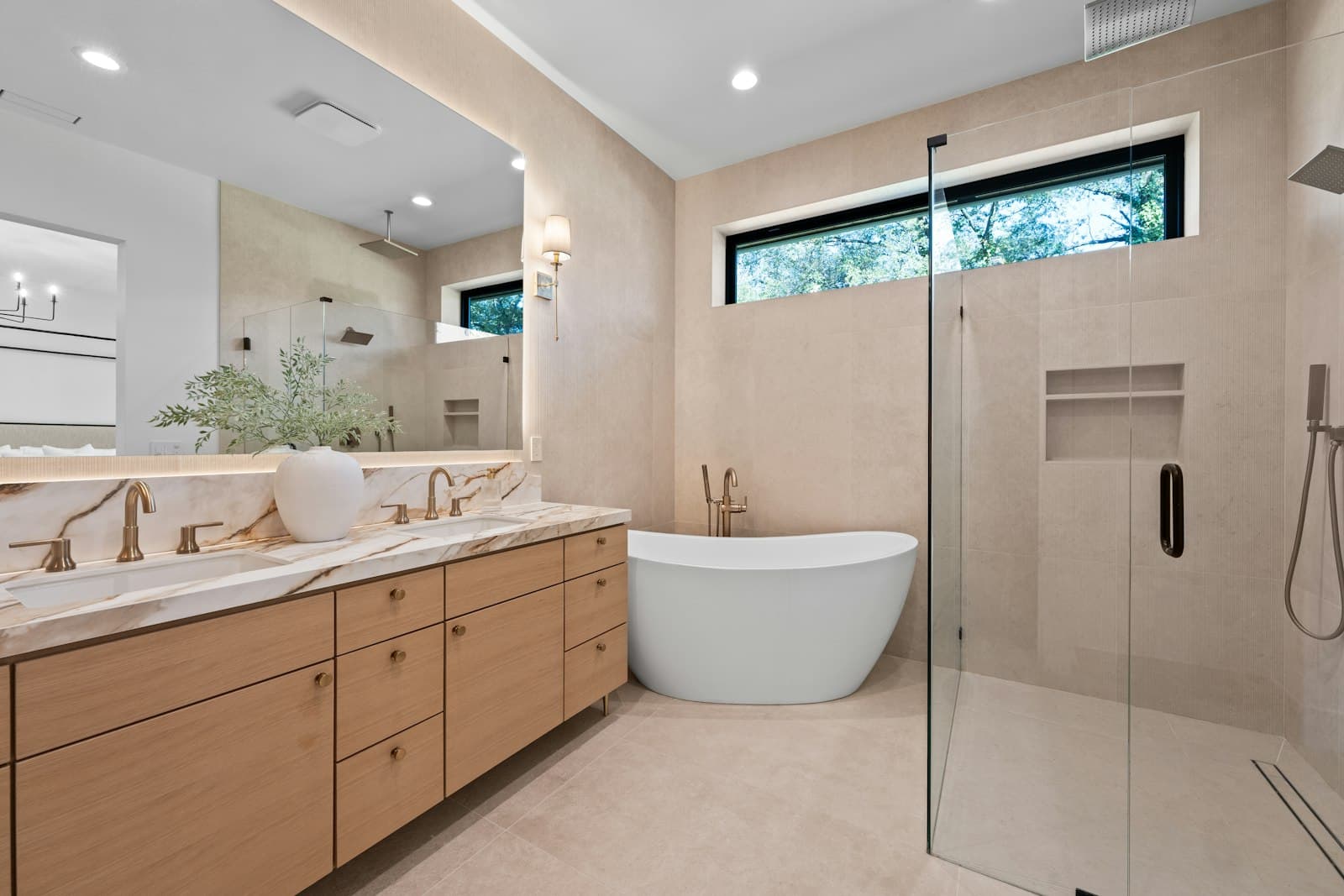
The best accessible bathrooms do not look clinical. They look intentional: clean tile, strong waterproofing, safe lighting, a stable shower bench, grab bars in matching finishes, a handheld shower, and storage that can be reached without bending or stepping into danger.
Cost of an ADA Bathroom Remodel in NJ#
Accessible bathroom remodeling has a wide price range because the words can mean anything from adding grab bars to rebuilding the entire room.
| Scope | Typical Central NJ range | Best fit |
|---|---|---|
| Safety retrofit | $2,500 - $8,000 | Grab bars, handheld shower, better lighting, shower seat, minor fixture changes |
| Tub-to-shower accessibility conversion | $12,000 - $30,000 | Replace tub with low-threshold shower, wall panels or tile, grab-bar blocking, shower door or curtain |
| Full accessible bathroom remodel | $25,000 - $60,000 | Gut renovation with new waterproofing, tile, fixtures, toilet, lighting, fan, and improved layout |
| Curbless shower or wet-room remodel | $35,000 - $75,000+ | Floor recessing or build-up, linear drain, full waterproofing, glass or open shower design |
| Layout change with door widening | $45,000 - $90,000+ | Move plumbing, widen doorway, improve turning clearance, structural or framing work |
Older NJ homes can add cost because bathrooms were often built small, with narrow doors, cast-iron tubs, older plumbing, shallow floor framing, and limited electrical capacity. In Lawrence, Hamilton, Ewing, Trenton, and Princeton-area homes, the hidden conditions behind the tile often matter as much as the visible finishes.
The Shower Is the Center of the Remodel#
Most ADA bathroom remodel searches are really shower searches. The homeowner is trying to remove the dangerous tub step-over, make bathing easier, and reduce fall risk.
Low-threshold shower#
A low-threshold shower is often the most practical option when a fully curbless shower would require major floor work. It lowers the step, keeps water containment simpler, and can still include grab bars, a bench, handheld shower, and slip-resistant tile.
Curbless shower#
A curbless shower is the cleanest accessibility solution when the structure allows it. The floor slopes into the drain without a raised curb. This helps wheelchair and walker access, but it has to be designed correctly. Drain location, floor pitch, waterproofing, glass placement, and splash control all matter.
Roll-in shower#
A roll-in shower needs more clear space than many older NJ bathrooms have. Sometimes it is possible inside the current room. Sometimes the real solution is stealing space from a closet, hallway, or adjacent room. The key is to design for the turning, transfer, and caregiver path before selecting tile.
Grab Bars Need Framing, Not Guesswork#
Grab bars are only as strong as what they are attached to. The ADA Standards require grab bars in covered facilities to resist a 250-pound force. In a home remodel, the practical lesson is simple: open the wall, add solid blocking, document the blocking location, and install bars into structure.
We often recommend installing blocking even where the homeowner does not want visible grab bars yet. That lets the bathroom look normal today while keeping the option to add support later without tearing out finished tile.
Good locations usually include:
- Shower entry
- Shower back wall
- Shower side wall near controls
- Beside the toilet
- Near a bench or transfer point
Toilet, Vanity, Door, and Lighting Details#
Accessible bathroom design is not only about the shower.
Toilet: A comfort-height toilet is easier for many adults to use than a standard low toilet. The final height should fit the user, not just a label on the box. Side-wall support and clear space matter more than the fixture alone.
Vanity: A floating or open-knee vanity can help wheelchair users, but not every homeowner needs that. Some need reachable storage, lever handles, better lighting, and less bending. The vanity should match the mobility requirement.
Door: A narrow bathroom door can make the whole remodel fail. Where possible, widening the opening, using an outswing door, or installing a pocket door can make access safer and give caregivers more room in an emergency.
Lighting: Bright, even lighting reduces fall risk and makes bathing easier. We plan overhead lighting, vanity lighting, shower-rated lighting, and night visibility so the room is safer at 2 a.m., not only during the day.
Permits for Accessible Bathroom Remodeling in NJ#
Most full bathroom remodels in NJ need permits when plumbing, electrical, structural framing, ventilation, or layout changes are involved. An accessible remodel often touches several of these areas: shower drain relocation, new valves, GFCI protection, fan ducting, lighting, door framing, or floor structure for a curbless shower.
The5thwall handles permit coordination for the remodeling work we perform. That matters because an accessible bathroom is supposed to make the home safer. Skipping permits, waterproofing, or electrical protection defeats the purpose.
Medicare, Grants, and Insurance: What to Expect#
Homeowners often ask whether Medicare pays for an ADA bathroom remodel. In most cases, Original Medicare does not pay for a bathroom renovation because it treats home modifications differently than prescribed durable medical equipment. Some separate programs, local grants, Medicaid waiver programs, veterans benefits, long-term-care policies, or nonprofit resources may help depending on the homeowner's situation.
The safe approach is to treat funding as a separate verification step. Before promising that a program will pay, confirm eligibility directly with the program, insurer, or benefits administrator. We can provide a written remodeling estimate and scope, but we do not promise funding approval.
Common Mistakes to Avoid#
- 1Adding grab bars without wall blocking. Surface-mounted support is not enough for a serious transfer point.
- 2Choosing pretty tile with poor traction. Wet-floor performance matters more than showroom appearance.
- 3Building a curbless shower without enough slope. Water must move to the drain without spreading across the room.
- 4Ignoring the doorway. A beautiful accessible shower does not help if the user cannot enter the bathroom comfortably.
- 5Forgetting the caregiver. Some bathrooms need room for another person to assist safely.
- 6Treating ADA as one fixed checklist. The right residential solution depends on the user, house, budget, and long-term plan.
How The5thwall Plans an Accessible Bathroom#
Our process starts with the person using the room. We want to know whether they use a walker, cane, wheelchair, transfer bench, shower chair, caregiver support, or no device today but want to plan for aging-in-place. Then we inspect the room: joists, plumbing location, door width, fan ducting, electrical, wall framing, water damage, and possible layout changes.
From there, we build the scope in plain English:
- What can be done inside the existing footprint
- What requires layout or framing changes
- Where grab-bar blocking will be installed
- Which shower entry type makes sense
- What waterproofing system will be used
- What permit work is included
- What choices affect cost the most
For homeowners in Lawrence, Hamilton, Ewing, Princeton, West Windsor, Pennington, Robbinsville, Hopewell, and nearby Central NJ towns, the goal is not just an attractive bathroom. The goal is a bathroom that works every day and still feels like part of the home.
Related The5thwall Guides#
For broader pricing, read our bathroom remodel cost NJ guide. For project timing, use our bathroom remodel timeline guide. If the shower is the main concern, see our walk-in shower installation cost NJ guide. For long-term safety planning, pair this with our aging-in-place NJ guide and our bathroom remodeling services page.
The5thwall designs and builds accessible bathroom remodels across Central NJ. Call (609) 954-3659 or use the contact form to schedule a visit.
Written by
The5thwall
Published May 18, 2026 · 13 min read
The5thwall is a father-and-son licensed NJ contractor based in Mercer County. Beyond the Blueprint is our journal — field-tested insights from two decades of renovation work across Central New Jersey.